

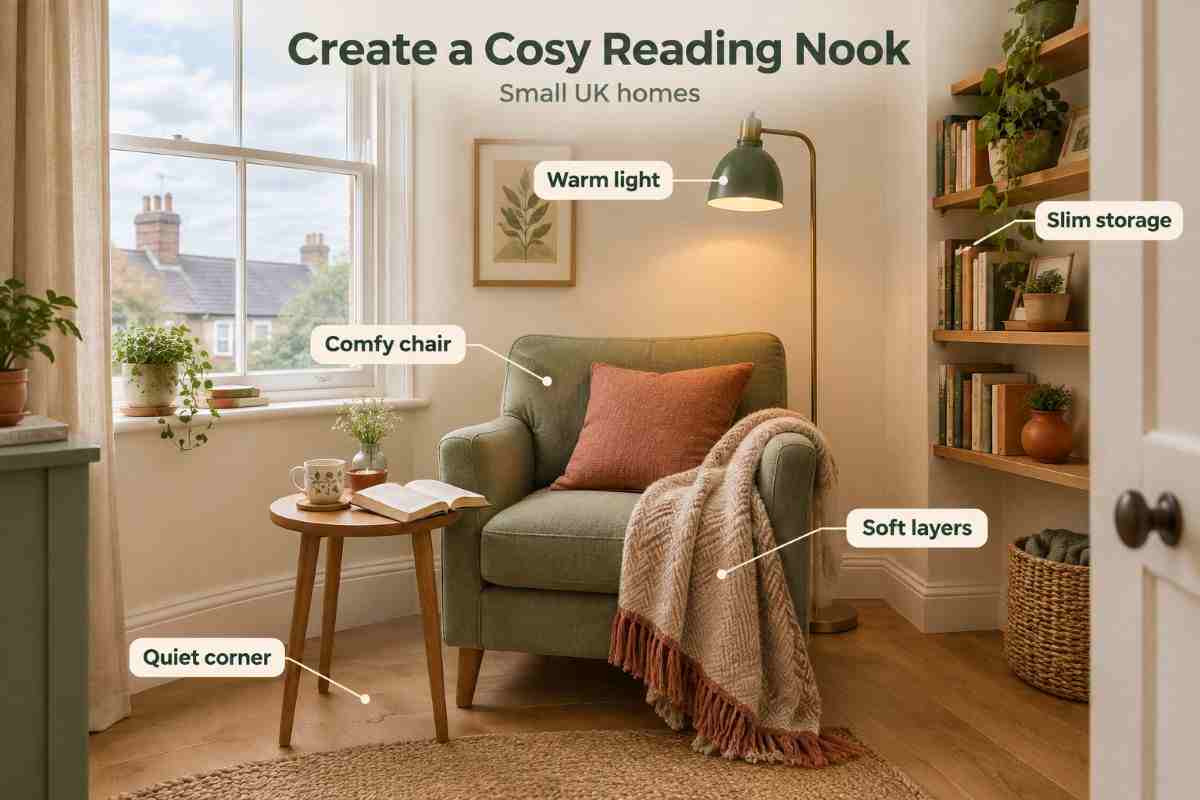
A cosy reading nook can make even a small home feel more personal. You do not need a separate library or an expensive renovation. With a comfortable seat, good lighting and somewhere to keep a few books, you can create a relaxing reading corner in a living room, bedroom or unused alcove.
The best cosy reading nook in a small house is one that fits naturally into your existing layout. It should feel inviting without blocking walkways, taking over valuable floor space or adding clutter.
Here is how to choose the right spot, make it comfortable and create a reading corner that works throughout the year.
1. Choose a Space That Is Already Available
Before buying furniture, look around your home for an underused area. Small spaces often have potential that is easy to overlook.
Consider these options:
- Beside a window: A good choice for daytime reading, especially if the spot receives comfortable natural light.
- In a living room corner: An armchair and a lamp can create a separate reading zone without needing a partition.
- At the end of a sofa: Use the existing sofa as your seat and add a reading light and small side table.
- In a bedroom: An unused corner can become a quiet retreat away from the television and everyday household activity.
- Under the stairs: If there is enough headroom and the area is dry, ventilated and accessible, it may suit a compact bench or reading chair.
- On a landing: A wider landing can accommodate a small chair, provided it does not obstruct the stairs, doors or escape routes.
- In an alcove: A shallow recess can work well with a fitted bench, cushions and wall-mounted shelves.
A window seat is particularly appealing in a traditional UK home with a bay window, but it is not essential. A simple chair positioned near a window can provide a similar sense of comfort without the cost of custom joinery.
Practical tip: Spend a little time sitting in your chosen spot at the time you usually read. Check the noise level, daylight, draughts and available space before committing to the layout.
2. Pick Seating That Fits the Room
Comfortable seating matters more than decorative accessories. If your chair is awkward or your back becomes uncomfortable after a few minutes, you are unlikely to use the nook regularly.
For a small home, consider the following options:
- Compact armchair: Provides back support and a dedicated place to sit. Check the overall width and depth, including the space needed to get in and out.
- Upholstered bench: Works well beneath a window or along a wall. A model with storage underneath can help keep books and blankets tidy.
- Existing sofa: The simplest option if you do not want to buy more furniture. A cushion, throw and adjustable lamp can make one end feel like a separate reading area.
- Storage ottoman: Useful for keeping blankets and magazines out of sight, although it should provide suitable support if you plan to sit on it for long periods.
- Floor cushions or a beanbag: Flexible choices for casual reading, particularly in a child’s bedroom. Choose one that is easy to move when the floor is needed for another activity.
Avoid choosing furniture based on appearance alone. A large, deep armchair may look inviting in a showroom but dominate a compact living room.
Measure the available area first, including the space needed for doors, drawers and everyday movement. If the room is shared, make sure the reading nook does not interfere with its other uses.
3. Use Lighting That Makes Reading Comfortable
Lighting can determine whether a reading corner works after dark, particularly during the darker months in the UK.
Start by making the most of natural daylight. Position your seat near a window where possible, but avoid placing it where direct sunlight causes glare on the page or screen.
For evening reading, add a dedicated task light.
Good options include:
- Adjustable floor lamp: Suitable beside an armchair, especially if you can direct the light towards your book.
- Wall-mounted reading light: Saves floor and table space. Check the installation requirements if you are renting.
- Table lamp: Works well on a narrow side table, provided the base is stable, and the light reaches the page.
- Clip-on book light: A practical, portable option for very small spaces or shared rooms.
- Rechargeable lamp: Useful where a power socket is not conveniently placed.
A warm-toned lamp can create a relaxed atmosphere, while a focused beam helps you see the text clearly. You do not have to choose between ambience and function: a reading lamp can provide the task lighting, with a softer lamp elsewhere in the room.
Avoid relying only on a dim ceiling light. Equally, make sure your reading light is not shining directly into your eyes or reflecting off glossy pages.
Dulux’s reading-nook advice also highlights comfortable seating, appropriate lighting, accessible book storage and soft furnishings as the core elements of a functional reading space. See Dulux’s reading nook ideas.
4. Make the Most of Vertical Storage
In a small home, floor space is often more valuable than wall space. Use the wall around your reading nook to keep books close without adding a bulky bookcase.
Useful storage ideas include:
- Floating shelves: Keep a small selection of books within reach while leaving the floor clear.
- A narrow bookcase: Fits beside a chair or at the end of a room, depending on the available width.
- A wall-mounted book ledge: Displays a few current reads without requiring a full shelving unit.
- A storage bench: Combines seating and storage in one piece of furniture.
- A small basket: Keeps magazines, a blanket or books you are currently reading together.
- An existing bedside table or chest of drawers: May provide all the storage you need without buying anything new.
Do not feel that every book must be displayed. Keep your current reading choices nearby and store the rest elsewhere if space is limited.
For shelves, follow the manufacturer’s fixing instructions and use fixings suitable for your wall type. Heavy books can put considerable weight on a shelf, so check its stated load limit. Secure tall furniture appropriately, particularly in homes with children.
5. Add Soft Textures and Cosy Colours
The difference between an ordinary corner and a cosy reading nook often comes down to texture. A few comfortable layers can make a small area feel welcoming without filling it with decorations.
Start with a cushion that supports your back, followed by a soft throw for cooler evenings. If the chair sits on a hard floor, a small rug can help define the area and make it feel more settled.
For colours, consider:
- Warm neutrals: Cream, beige and soft taupe create a calm backdrop.
- Nature-inspired shades: Sage green, olive and muted earthy colours work well with wood and natural fabrics.
- Deeper colours: Forest green, navy or burgundy can give a reading corner a snug, enclosed feel.
- Soft pastels: Pale blue, blush pink or muted lavender can suit a light, airy bedroom.
You do not need to repaint the room. Cushions, a lampshade, a throw or a small piece of artwork can introduce a colour scheme without a major change.
Natural materials such as cotton, linen, wool and wood can add visual warmth. Choose fabrics that are easy to clean if the nook is in a busy family room or near pets.
Keep accessories selective. A favourite print, a small plant or a personal keepsake is often enough to make the space feel like yours.
6. Make the Nook Work in a Rented Home
You can create an inviting reading corner without drilling into walls or making permanent changes.
If you rent, try these reversible ideas:
- Use a freestanding lamp instead of installing a wall light.
- Choose a compact book trolley or narrow bookcase.
- Use a removable cushion on an existing bench or window seat.
- Add a rug to distinguish the nook from the rest of the room.
- Keep books in baskets or on a small side table.
- Use removable picture-hanging products only where they are suitable for the wall finish and the item’s weight.
Check your tenancy agreement before making alterations, particularly if you want to install shelves or change fixtures. Even removable products can damage some paint and wallpaper.
A rented home can still have a reading corner with character. The goal is to work with the furniture and space you already have rather than waiting until you own a property to create a comfortable home.
7. Create a Reading Nook on a Small Budget
You can start with items you already own and add new pieces only when you discover what the space needs.
A simple, low-cost approach is to:
- Choose an unused corner or the end of an existing sofa.
- Add a comfortable chair or reposition furniture you already have.
- Use a suitable lamp for evening reading.
- Keep a few books within reach on a shelf, stool or in a basket.
- Add one cushion and a throw for comfort.
- Finish with a personal detail, such as artwork or a favourite mug.
The biggest savings often come from avoiding unnecessary furniture. You may not need a new chair, bookshelf, side table and rug. One or two well-chosen additions can be enough.
Try the arrangement for a week before buying anything else. You may find that the existing table is close enough, the lighting is already suitable, or the corner works better without a rug.
8. Common Mistakes to Avoid
A reading nook should make a small home more comfortable, not more difficult to use.
Watch out for these common problems:
- Choosing a chair that is too large: It can overwhelm the room and restrict movement.
- Ignoring the light: A beautiful corner is less useful if you cannot comfortably read there in the evening.
- Adding too many accessories: Excess cushions, baskets and decorative objects can make the area feel cluttered.
- Forgetting a surface for essentials: A small, stable table or shelf gives you somewhere to place glasses, a bookmark or a drink.
- Blocking a walkway: Keep stairs, doors, windows and regular routes through the room accessible.
- Putting style before comfort: Test the seat and consider back support before buying it.
- Ignoring safety: Keep lamps stable, manage electrical cables carefully and keep hot drinks away from books and electrical equipment.
A successful nook does not have to look like a professionally styled interior photograph. It simply needs to be comfortable, practical and easy to use.
Frequently Asked Questions
How much space do you need for a reading nook?
There is no fixed minimum size. A reading nook can be as simple as an existing sofa seat with a lamp, or a compact chair in an unused corner. Measure the furniture and preserve enough room for comfortable access and safe movement.
Where is the best place for a reading nook in a small house?
A quiet corner near a window is a good starting point because it can offer natural light. Other useful locations include a bedroom corner, an alcove, the end of a sofa or an appropriately sized landing.
What lighting is best for a cosy reading corner?
A dedicated adjustable reading lamp is usually the most practical choice. Position it so the page is well lit without creating glare or shining directly into your eyes. Softer background lighting can add atmosphere.
How can I create a reading nook without buying new furniture?
Use an existing chair, sofa or window bench. Add a lamp you already own, keep books in a basket or on a shelf, and use a cushion or throw to improve comfort. Try the arrangement before spending money on additional pieces.
How do you make a reading nook feel cosy in winter?
Use a comfortable throw, supportive cushions and a warm-toned lamp. Check for draughts near windows and choose a seat that feels comfortable for longer sessions. Keep fabrics safely away from heaters, candles and hot lamp surfaces.
Create a Corner You Will Actually Use
The best reading nook for a small UK home starts with the space you have, not the furniture you think you need. Choose a comfortable seat, provide good lighting, keep your current books close and add a few textures that make the corner inviting.
Start small and let the space develop around your reading habits. A thoughtfully arranged corner can become a favourite part of your home without taking over the room.


